A joint initiative of the CSRS and University of Oxford teams
Abidjan, 5 October 2026 — On World Meningitis Day, the team at the Centre Suisse de Recherches Scientifiques en Côte d’Ivoire (CSRS) and the University of Oxford team jointly announce the launch of AMERT — African Meningitis Epidemiology in Real Time. The platform facilitates the storage, analysis and contextualisation of genomic data on bacterial meningitis pathogens in Africa.
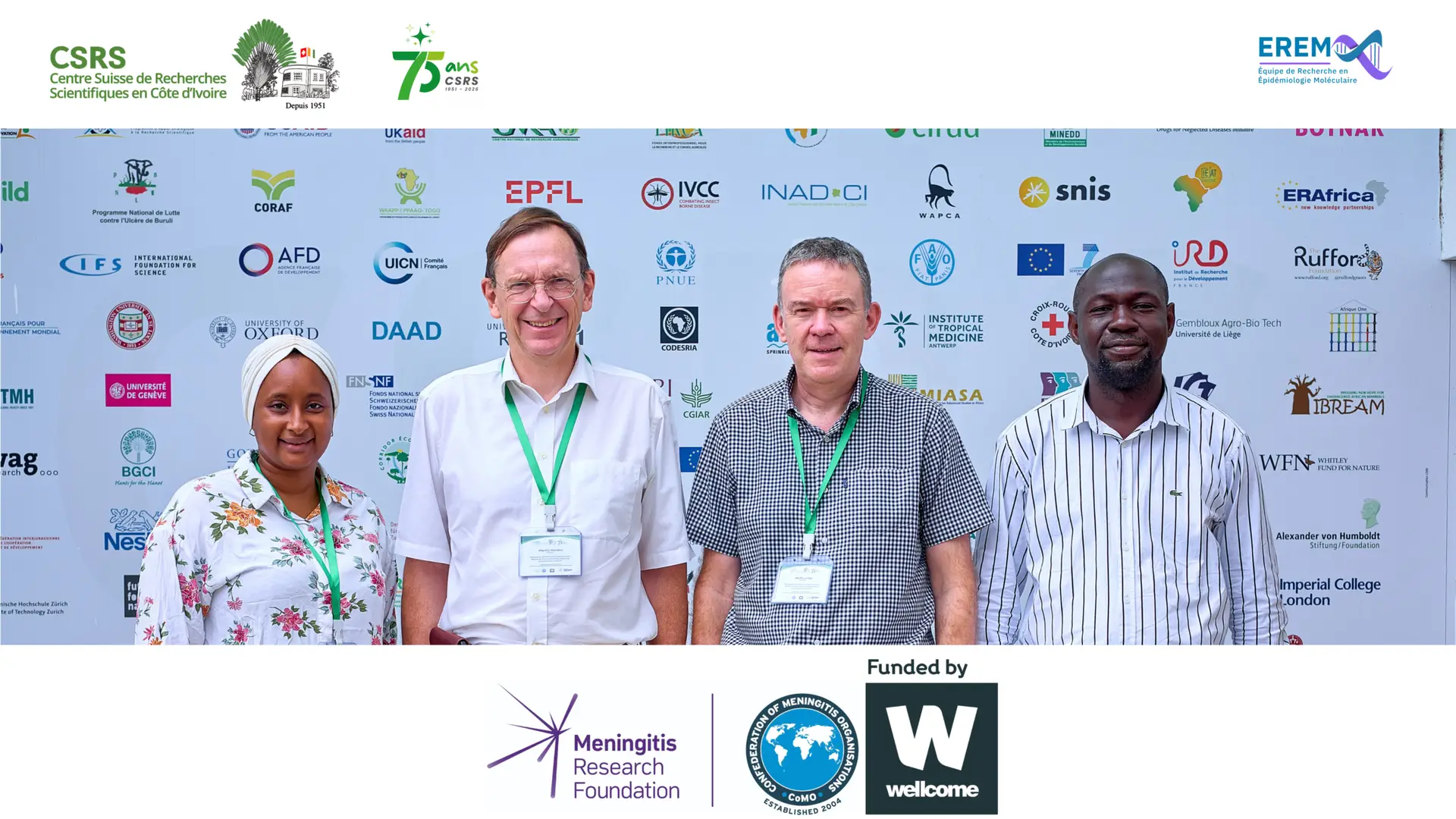
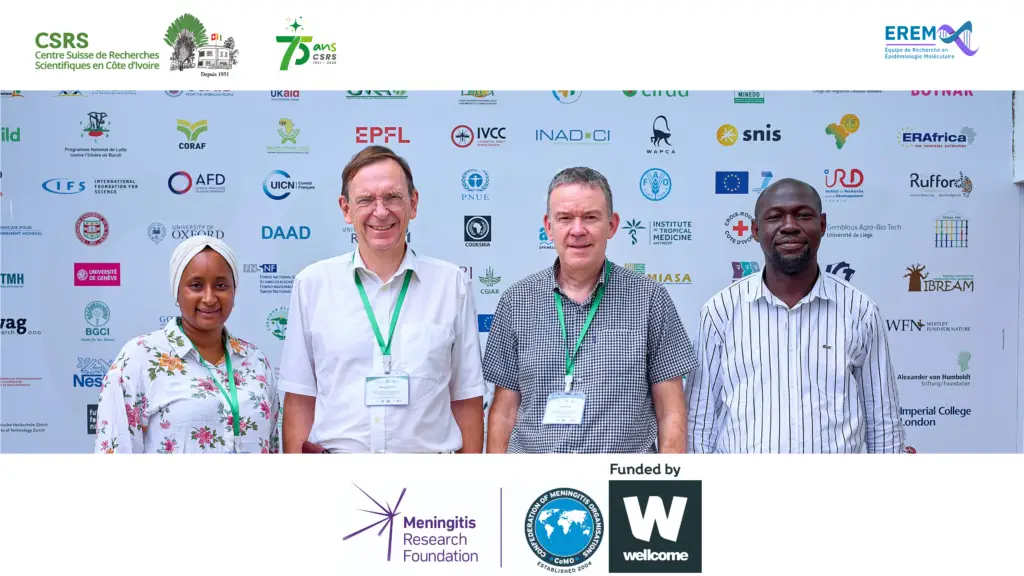
AMERT is a joint initiative of Dr Kanny Diallo and Dr Tiemele Simon Amoikon, from the Molecular Epidemiology Research Team (EREM) at CSRS, and Professor Martin Maiden and Dr Keith Jolley, from the University of Oxford. This shared effort aims to make sequencing data more useful to laboratories and bacterial meningitis surveillance across Africa.
The platform comprises four databases populated with curated, publicly available genome sequences. As of 1 October 2026, they contain 3,237 Neisseria meningitidis genomes, 95 Haemophilus influenzae genomes, 312 Streptococcus agalactiae (group B Streptococcus, GBS) genomes and 7,185 Streptococcus pneumoniae genomes. These data provide an initial resource for contextualising sequences from participating laboratories.
Built on the PubMLST infrastructure, AMERT provides participating laboratories with a space to upload, store and analyse their sequence data while retaining control and keeping their data non-public for as long as needed. AMERT users can view sequences deposited within the platform but cannot edit other laboratories’ sequences. Access within AMERT is therefore distinct from making data publicly available.
Comparison with public isolates already available in PubMLST places the sequences being analysed in national, regional, continental and global contexts. Laboratories can interpret their results alongside a broader collection of African and international genomic data.
Through this joint initiative, the CSRS and University of Oxford teams invite national reference laboratories, university teaching hospitals and research centres to join AMERT and submit their data. Their participation will help improve the representation of African bacterial meningitis genomes, strengthen understanding of the diversity and circulation of these pathogens, and support public health decision-making.
On World Meningitis Day, both teams call on African laboratories to contribute to AMERT, analyse their data and work together to strengthen genomic surveillance of meningitis across the continent.
Ends